Innovative invention

Put through its paces – the new ‘Rollator-Rest’ safety system

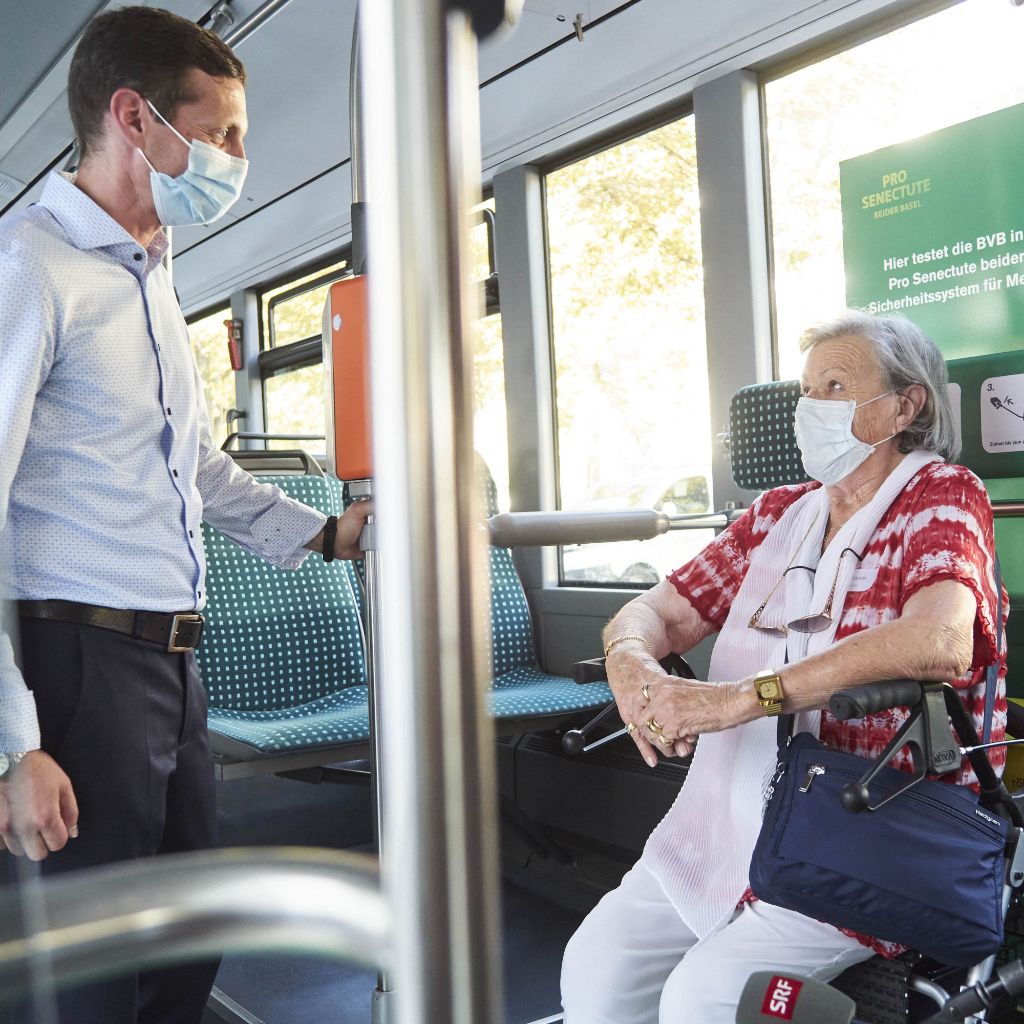
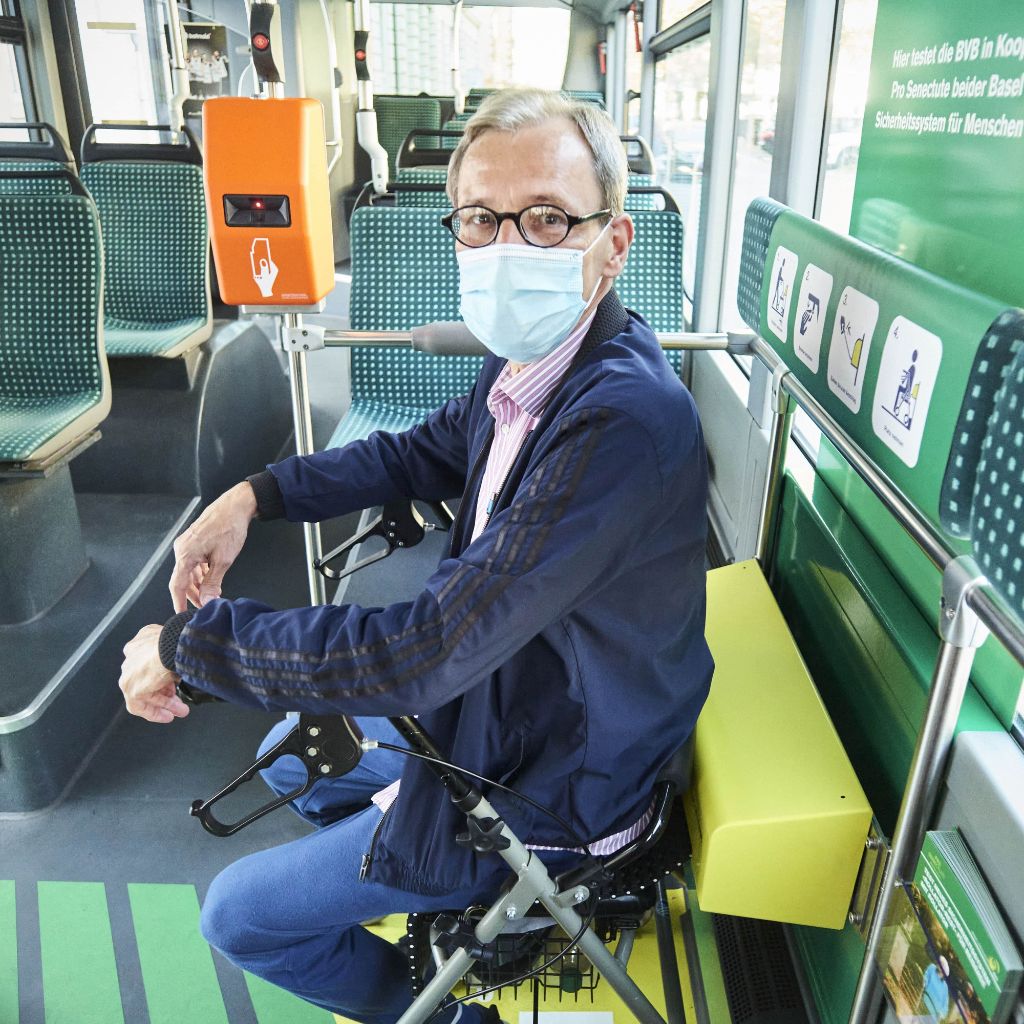
“I’ve never felt so safe” – is one of the enthusiastic comments from our test participants. Four older women and one older man have thoroughly tested the “Rollator-Rest” safety system – a world first by inventor Pascal Lippmann. Thanks to the collaboration between Basler Verkehrs-Betriebe and Pro Senectute in both Basel cantons, anyone interested can try out this unique system on bus route 33 over the next six months.

Paula L. has been using a rollator in her daily life for two years. The Basel resident actually manages quite well with it. There’s just one thing she hasn’t dared to do yet: travel alone by bus from Rankhof into the city. She always has to be accompanied by her husband, Werner. The problem is that the elderly lady does not feel safe on the bus with her walking frame; she is afraid of falling.

Problems getting on
the bus Many older people who use a rollator find themselves in the same situation as Paula L. Speaking on behalf of this group, the five test participants gathered this afternoon at the BVB headquarters on Claragraben to describe the problems they encounter when using public transport. Everyone agrees that travelling by bus is particularly difficult and is avoided wherever possible. The only alternative is then an expensive taxi.
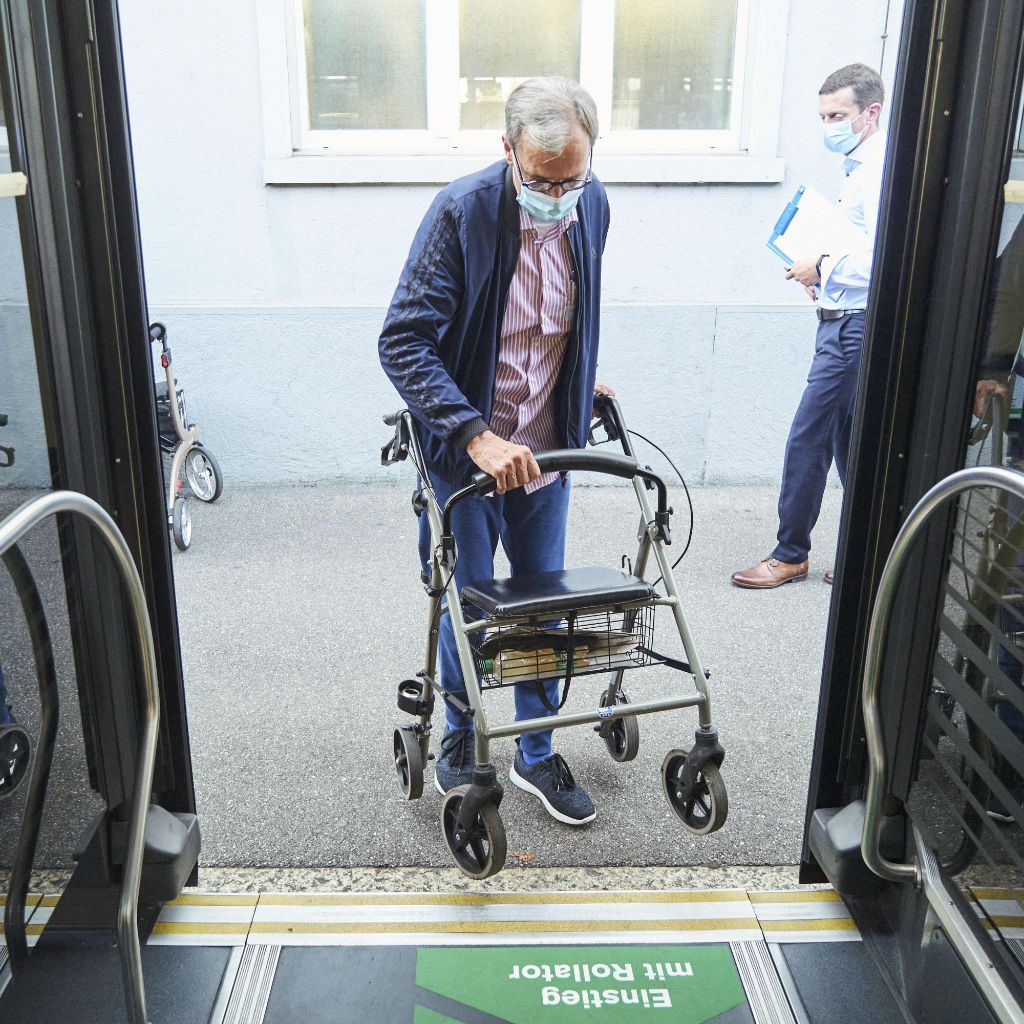
Senior mit Rollator steigt selbstständig in einen Bus ein.
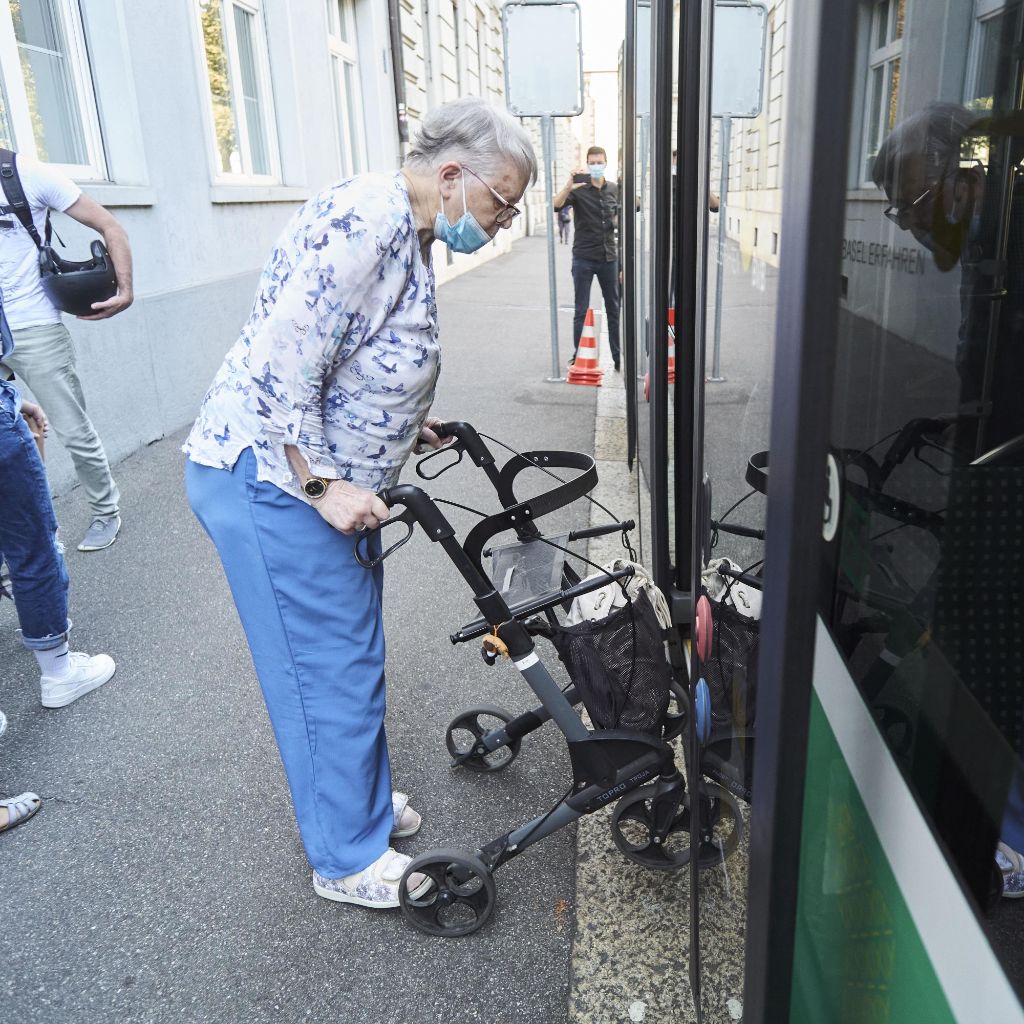
Seniorin steigt selbstständig mit ihrem Rollator in einen Bus ein.

Some people struggle to get on because, at some bus stops, there’s a gap between the kerb and the vehicle that’s far too wide, whilst at others the step is simply too high. Although there are always other passengers willing to help, you can’t rely on that. Once you’re on the bus, the hunt begins for a place to park your walking frame, a handrail or a seat. “Holding on to a handrail in a crowded bus, with your walking frame in hand, is difficult,” complains Elisabeth Brechbühl, who has even fallen over because of this. Drivers setting off too abruptly or too quickly, as well as unexpected braking manoeuvres, are also a problem for passengers with walking difficulties. Reto Z. (62), who is actually quite sporty but has relied on a walking aid for several years due to an illness, sums up the problem in the best Basel dialect during the introductory round: “We’d rather be on the sidelines.”

Commitment to greater safety on public transport
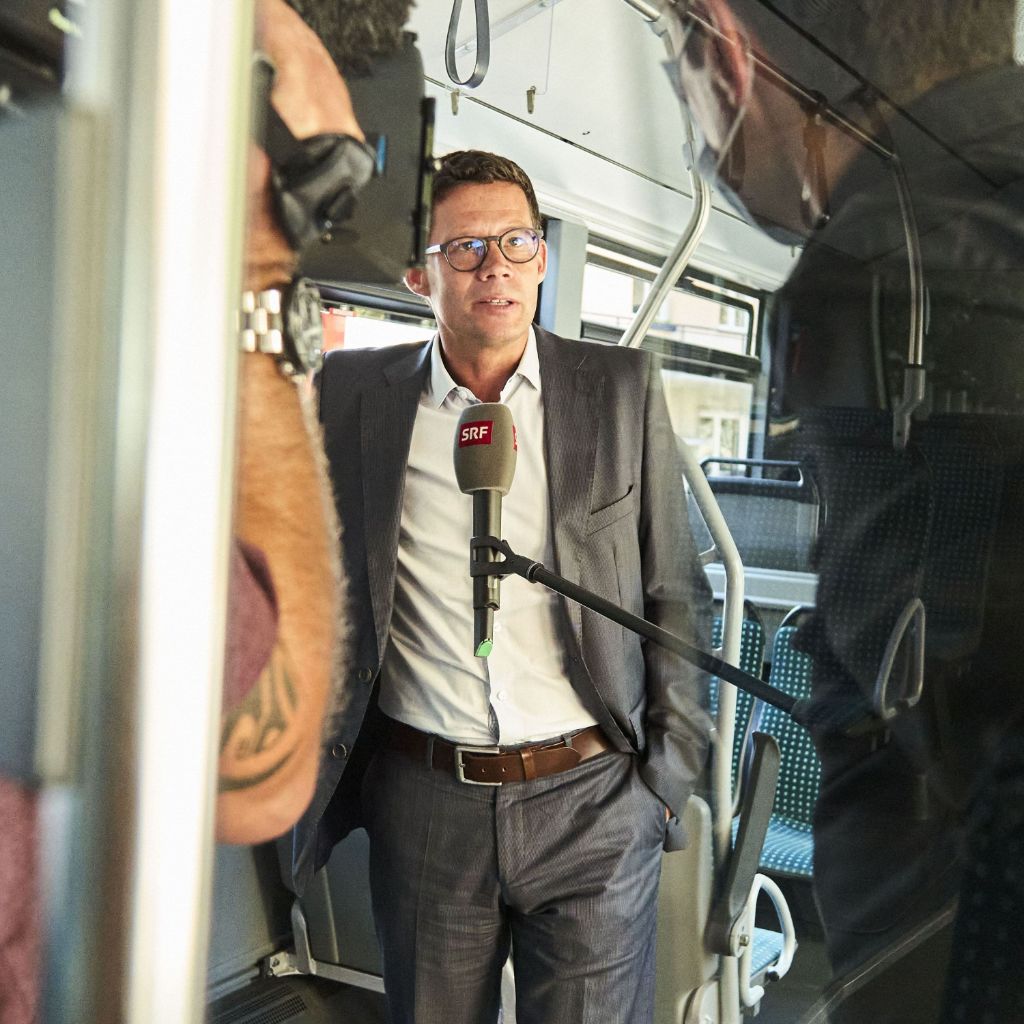
It is precisely these unresolved problems that are the reason why Michael Harr, of Pro Senectute in both Basel cantons, is involved in the ‘Rollator-Rest’ trial. “To improve safety on public transport, particularly for people with walking difficulties and older people, you sometimes have to try something out. That’s the only way progress is possible,” he explains to the test participants regarding the collaboration with the BVB. And the charitable foundation is going to great lengths to achieve this. According to the managing director, it generally raises awareness of the issue of ‘the safety of older people on public transport’ through its own media channels and is also actively campaigning for improvements. “As part of the collaboration,” says Harr, “we have, for example, sought out suitable test participants and supported the BVB in carrying out the practical test.”

Geschäftsleiter gibt in einem Bus ein Interview an SRF.
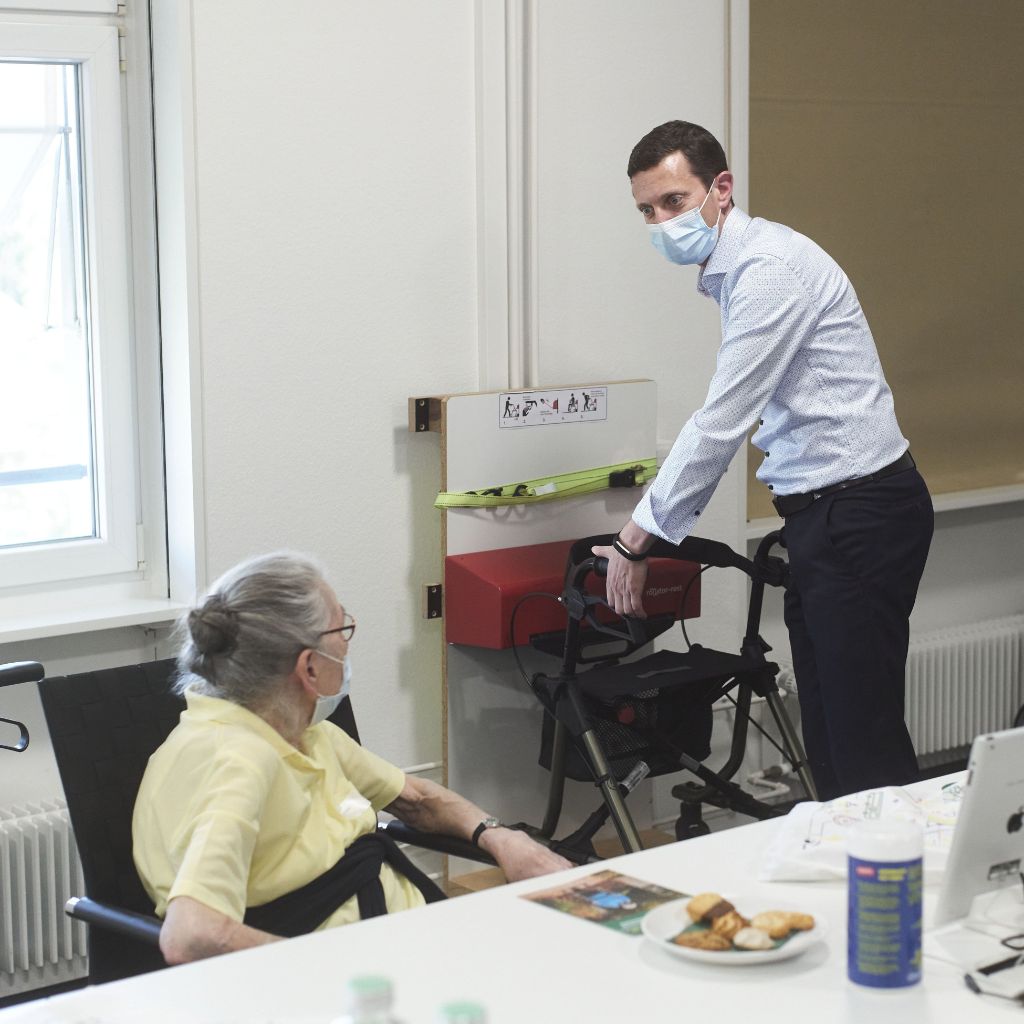
Kundin sitzt in einem Rollstuhl am Tisch eines Sitzungszimmers und unterhält sich mit Mitarbeiter.

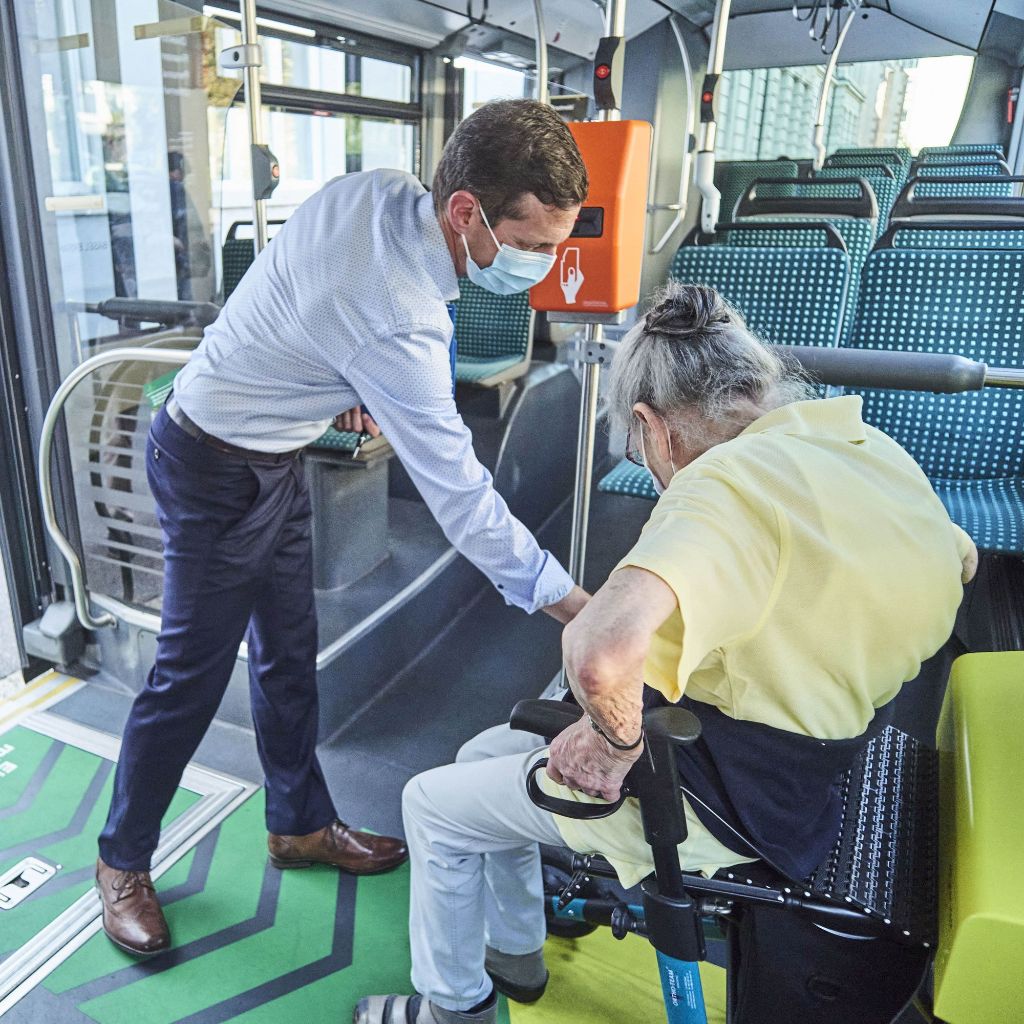
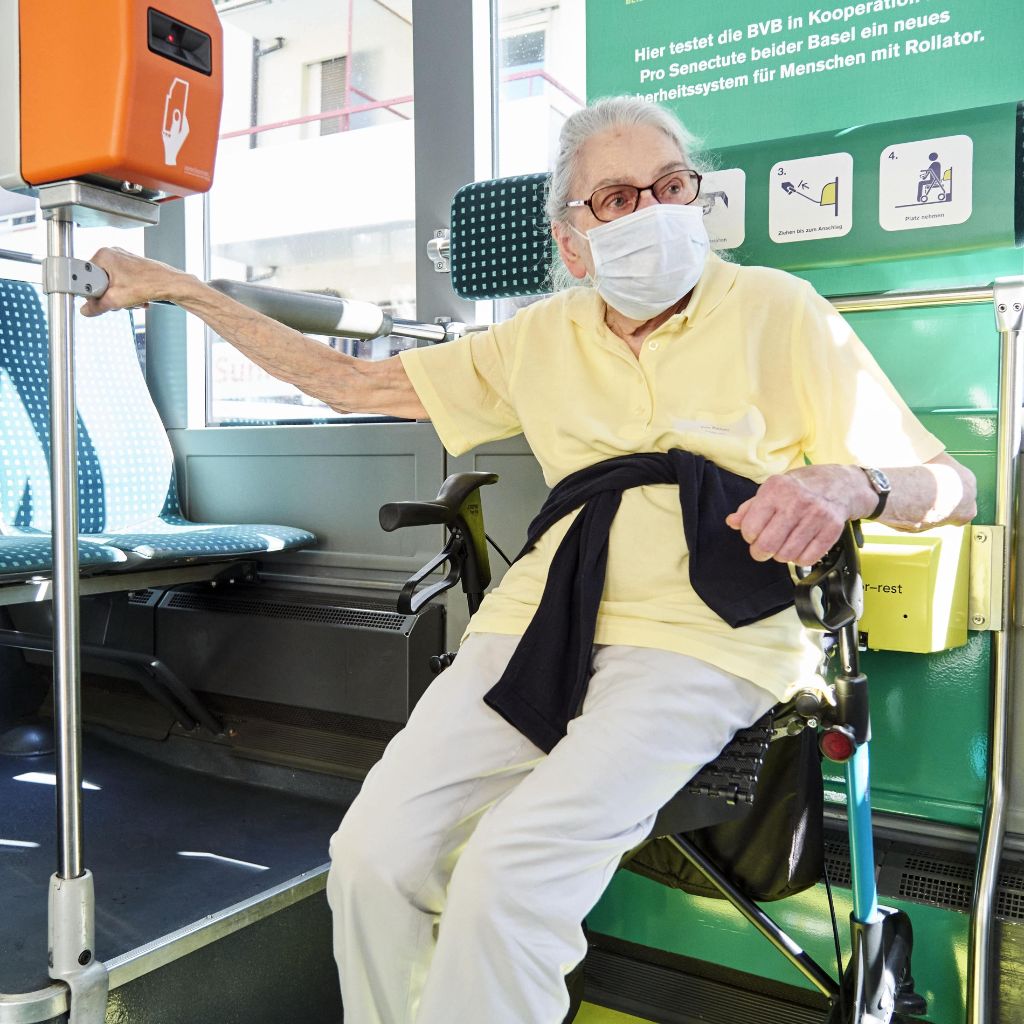
The safety system is based on an idea by Pascal Lippmann, who used to work for BVB. He now advises companies and organisations in the public transport sector through his firm, Pryo Consult GmbH. The inventor’s patented idea – ‘a world first’ – is actually quite simple, but that is precisely why it is so ingenious: Just like fastening a seatbelt in a car, with the ‘Rollator-Rest’ you pull a mat out of a metal container on the wall. You place this mat over the rollator, which is secured by the brakes – and you instantly have a stable and comfortable seat.

Practical test with a few snags
Pascal Lippmann demonstrates how the safety system works using a model in the meeting room. Here, all the test participants familiarise themselves with the ‘Rollator-Rest’ – in a dry run, so to speak – before moving on to the real system on bus number 808. Incidentally, until the end of February, this bus will mainly be running on route 33 from Schifflände to Allschwil-Schönenbuch.

During the practical test, a few of the system’s pitfalls became apparent. Iris R., for example, was the only one in the group who was not satisfied with her journey on the bus and the ‘Rollator-Rest’. ‘Impractical,’ is her verdict. She found it difficult to pull the mat out of the metal container and drape it over her narrow rollator. As a result, she sits cramped in her seat during the journey on the test bus. Pascal Lippmann finds the elderly woman’s comments and experiences interesting. Although he tested over fifty rollator models during the system’s development, he was not yet familiar with this particular model. His conclusion: “We need to hang the metal container higher and make the mat narrower.”

Mitarbeiter hilft sitzenden Seniorin im Bus bei der Befestigung ihres Rollators.
Seniorin sitzt in einem Bus auf ihrem Rollator.

Brilliant! Safe and stable! Comfortable!
The other senior citizens, on the other hand, are delighted with the new system, as they had no problems with their walking frames. “Brilliant!” says Paula Lauper of her journey, “I’ve never felt so safe.” And she remarks playfully to her husband, who accompanied her on the test ride, with a wink: “Now you’ll have to keep an eye on me as soon as I start travelling into town on my own by bus again.”

Mitarbeiter unterhält sich im Bus mit Seniorin, die auf ihrem Rollator sitzt.
Senior sitzt in einem Bus auf seinem Rollator.

Text: Christine Valentin
Photos: Roland Schmid

Swiss television reported on the practical test in the programme ‘Schweiz Aktuell’ on 15 September 2020.